

Most crypto exchange reviews spend their first few paragraphs establishing basic trust — is this thing regulated, has it been hacked, can I actually get my money out. With VALR, that groundwork goes quickly: it's licensed by South Africa's Financial Sector Conduct Authority, has over a million users, and has built a specific, unusual fee structure that's worth understanding in detail rather than glossing over. The more interesting questions are about fit and scope, not basic legitimacy.
What VALR is and who it's built for
VALR is a centralized exchange headquartered in Johannesburg, offering spot trading, OTC services, and a growing set of products around roughly 60+ supported cryptocurrencies. It's licensed as a Crypto Asset Service Provider by the FSCA in South Africa and registered with the Financial Intelligence Centre (FIC), and has stated intentions to expand regulatory coverage into additional jurisdictions, though its core, verified regulatory standing remains specifically South African.
Fiat support is genuinely narrow by global standards — ZAR primarily, with Zambian kwacha and USDC available in some contexts — which makes VALR a strong fit if you're transacting in rand, and a non-starter if you're not. That's a deliberate trade-off rather than an oversight: VALR isn't trying to be a global all-in-one exchange, and its feature set reflects a platform built specifically around the South African and broader African crypto market.
The fee structure worth actually understanding
| Fee type | Rate | Notes |
|---|---|---|
| Exchange maker | -0.01% (a rebate) | VALR pays you to add liquidity via limit orders |
| Exchange taker | ~0.1% | Standard market-order rate |
| Instant Buy/Sell | ~0.75% | Convenience premium for one-click trades |
| Simple Swap | ~0.75–0.85% | Convert between assets directly |
| ZAR deposits | Free | Standard bank transfer |
| Crypto withdrawals | Network fee only | Varies by asset |
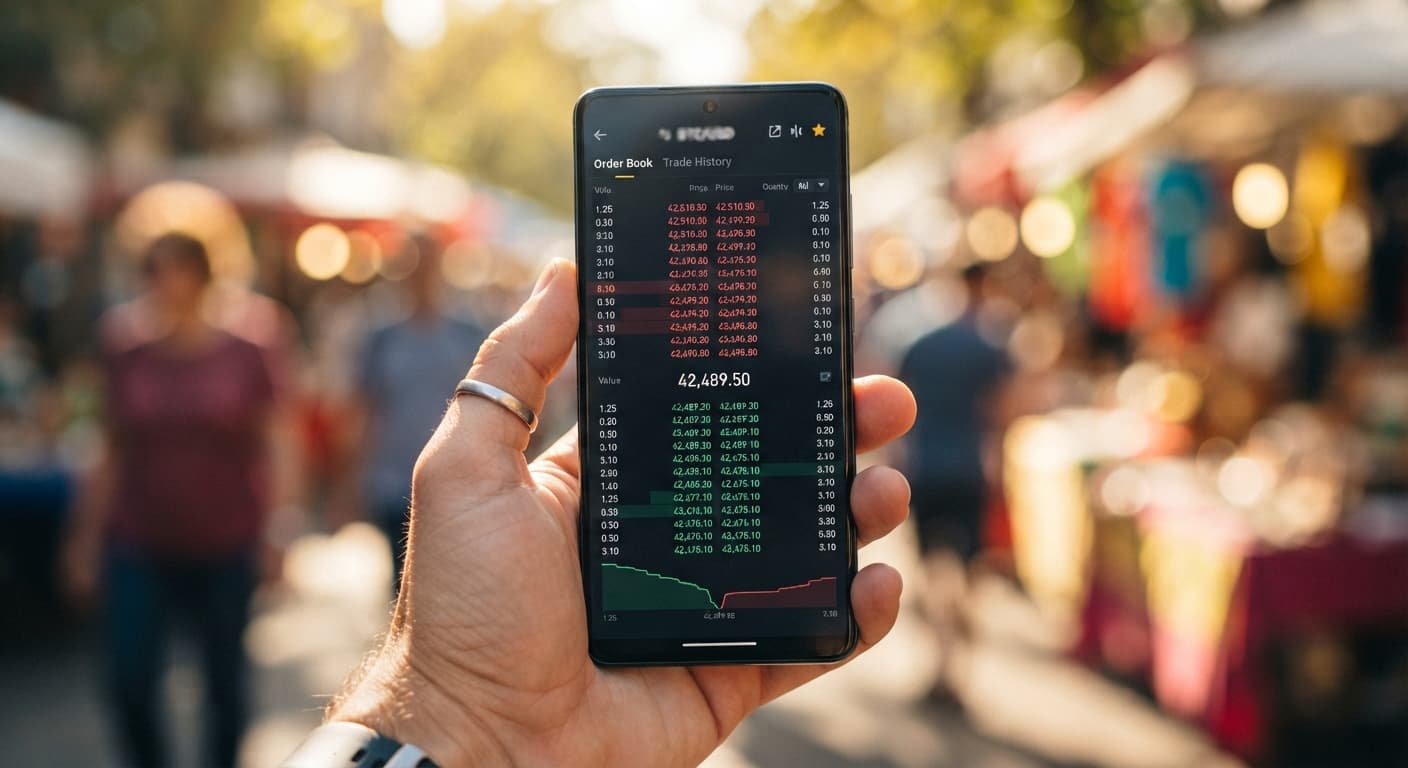
The negative maker fee is the detail that actually sets VALR apart from most of the exchanges in this space. Rather than just discounting maker fees at high volume like most platforms do, VALR pays limit-order users a small rebate on the standard exchange tier — a fee model more commonly seen on institutional-grade venues than retail-facing exchanges. It's a meaningful incentive to use limit orders over instant buy/sell, and the fee gap between the two (roughly 0.75 percentage points) is large enough to matter even for casual traders.
Security and what backs it up
VALR reports standard-but-solid security practices: cold storage for the large majority of assets, multi-signature and segregated account structures, two-factor authentication, and stated insurance coverage on holdings. Independent reviewers have generally rated VALR's security measures favorably relative to peers, and there's no widely reported history of a successful breach affecting user funds.
The honest caveat, consistent across independent assessments, is that VALR doesn't hold Tier-1 regulatory status in the sense that a US, UK, or EU-licensed exchange would — its regulatory foundation is specifically South African, which is meaningful and real, but sits a tier below the broadest global oversight frameworks. For users trading primarily in rand from within South Africa, that's a reasonable, well-supported regulatory position. For anyone comparing it against globally licensed giants on that specific axis, it's worth knowing where the line actually sits.
As Wes Ibarra put it, on what it takes for a platform's claims to hold up under scrutiny:
"Most 'green crypto' claims fall apart the moment you ask for the methodology. My job is to ask anyway — and to give credit on the rare occasions the math actually holds up."
VALR's fee structure and South African licensing are the kind of claims that check out cleanly against the available evidence — a genuinely rare thing to say plainly about a crypto exchange without qualification.
Where VALR fits into the broader African crypto access story
South Africa has one of the continent's more mature regulatory frameworks for digital assets, and VALR's position as the country's leading licensed exchange gives it an outsized role in how ordinary South Africans actually get exposure to Bitcoin and other assets — not through an offshore platform with unclear jurisdiction, but through a locally licensed, ZAR-native entry point. That's a genuinely different value proposition than most of the exchanges built primarily around chasing global trading volume, and it's worth recognizing as its own category of usefulness rather than judging VALR purely against Binance-scale metrics it was never trying to hit.
Who it's actually a good fit for
- South African traders who want ZAR-native deposits and a regulated local counterparty rather than an offshore platform
- Limit-order users specifically, given the negative maker fee — active traders who plan their entries rather than market-buying will see the biggest benefit
- Not a fit for anyone outside VALR's supported fiat currencies, or traders who specifically need the widest possible altcoin selection or Tier-1 multi-jurisdiction licensing
How it compares
| Exchange | Maker fee | Regulatory base | Fiat support |
|---|---|---|---|
| VALR | -0.01% (rebate) | FSCA (South Africa) | ZAR, ZMW, USDC |
| Kraken | ~0.16% | Multiple Tier-1 | Wide (USD, EUR, GBP, etc.) |
| Gate.io | ~0.025% | Limited/offshore | Primarily crypto |
VALR's maker rebate genuinely beats both comparison points on that specific line — it's one of the few retail exchanges anywhere paying users to provide liquidity rather than just discounting the fee toward zero.
Frequently asked questions
Is VALR regulated? Yes, it's licensed as a Crypto Asset Service Provider by South Africa's FSCA and registered with the FIC — a real, verifiable regulatory foundation, though not Tier-1 in the sense of US, UK, or EU-level oversight.
Is VALR only for South Africans? Its core fiat support (ZAR primarily) makes it most useful for South African users specifically, though it has stated ambitions to expand its regulatory footprint further across Africa and beyond.
What makes VALR's fees unusual? Its negative maker fee — VALR pays a small rebate to users placing limit orders on its standard exchange tier, rather than the more typical zero-to-low discount most exchanges offer.
Has VALR ever been hacked? There's no widely reported history of a successful breach affecting user funds, and independent reviewers generally rate its security measures favorably.
Is VALR cheaper than Kraken or Binance? On maker orders specifically, yes — the rebate model beats standard maker fees at most major exchanges. Instant buy/sell and swap features carry a higher premium, so the savings depend heavily on how you actually trade.
What actually distinguishes this one
A lot of exchange reviews end up sounding the same because most exchanges are, functionally, the same: a maker-taker fee table, cold storage, 2FA, a coin list. VALR earns a more specific write-up because it's doing something a little different — a fee model that rewards patient traders instead of just punishing impatient ones, built by a platform that picked a clear regional focus rather than chasing every market at once. For South African traders specifically, that combination is hard to match locally; for everyone else, it's a reminder that the biggest exchange isn't always the most thoughtfully built one.
Article by Wes Ibarra, who checks whether a platform's numbers hold up before deciding whether its reputation is earned.